
Track Test: Matteo Zamboni #74 - Polenta e Motori

Updated: Apr 27
I want to start this blog — and this new format (which we still need to find a name for 😄) — with a sincere thank you.
A heartfelt thank you to Matteo Zamboni. As well as being a brilliant driver (and you only need to glance at today’s lap times to see that straight away), he is, above all, a true motorsport enthusiast. But even more importantly: he’s a really helpful person.
We spent a truly wonderful day of testing together, the sort that reminds you why you love this sport. Between practice sessions, chats and a few laughs, it was one of those moments worth sharing here too.
And it is precisely days like these that have given rise to this space.

It wasn’t by chance that we met up on Saturday 18 May at the Riccardo Borile circuit (polenta e motori) in Vò Euganeo. We’d arranged to meet with a specific aim in mind: to put new products to the test and really understand how they perform on the track. Matteo had already tested some of the parts, so it was the perfect opportunity to fine-tune things, compare notes and take things a step further.
Because, yes, our work doesn’t stop at the office. In fact, the most important part happens right here: on the track.
That’s where you realise what really works, what needs improving and, above all, what a rider really needs.

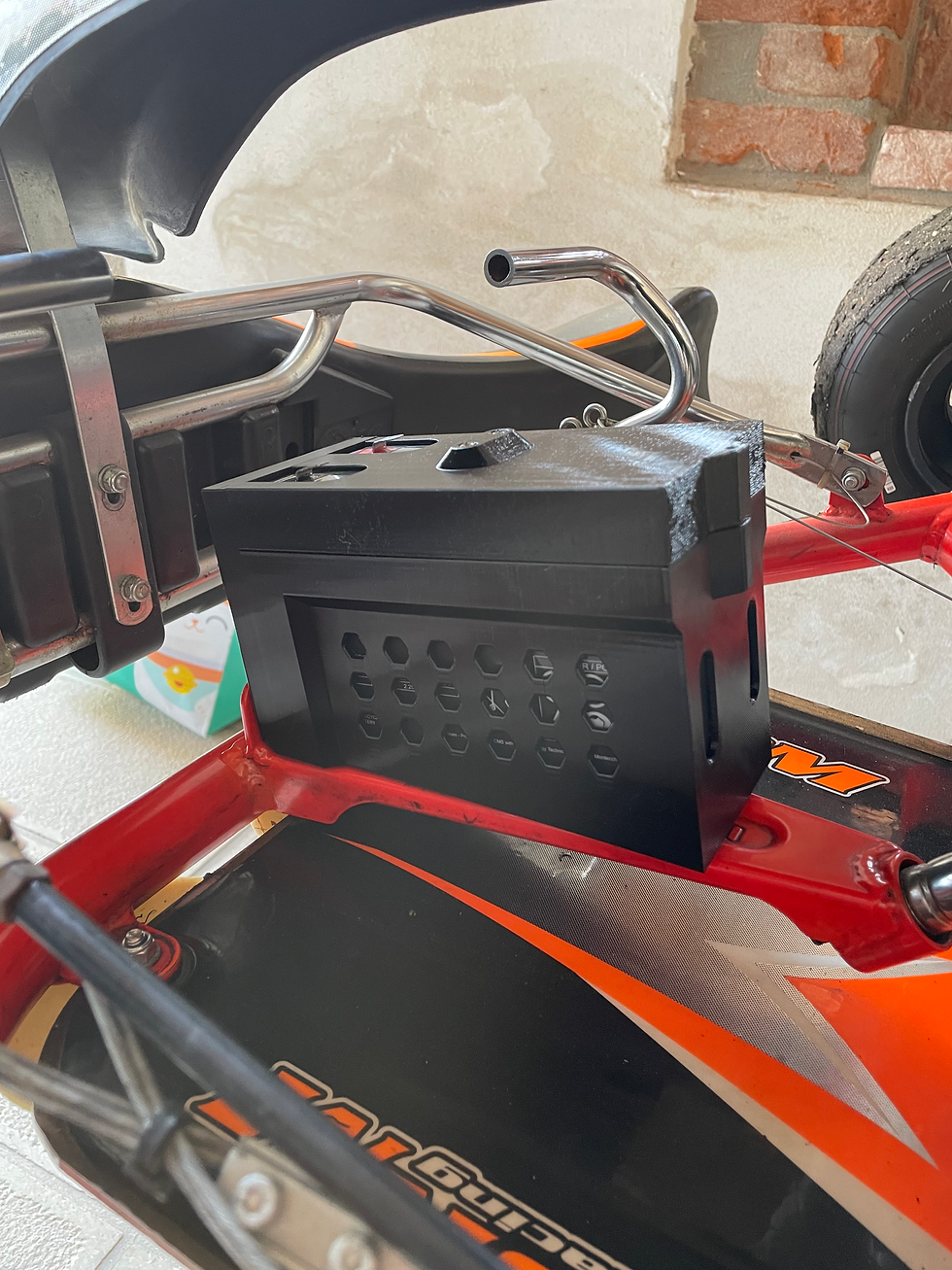
The main focus of the day? Without a doubt, the new rear tyre temperature sensors.
The idea is simple: to tell at a glance whether the tyres are performing as they should. The sensors read the temperature and, thanks to an LED, give you an immediate, clear indication: blue, green or red, depending on the range we’ve set. So you know straight away if you’re in the ideal range or if the tyres are too cold… or too hot.
But that’s not all.
All the data is saved to a microSD card, so at the end of the session you stop, look at what actually happened on the track and make adjustments for the next run.
Less reliance on ‘gut feeling’, more concrete data to work with.

How did the sensors perform? I’ll tell you all about it in the next article… sorry about that 😜
If you’re curious to find out how it really went on the track, all you need to do is sign up to the website: that way, you’ll stay up to date on both new products and the tests we’re carrying out.

Another component we put under a lot of strain was the TubeSlime EVO bumper, which is perfect for protecting the kart at its most vulnerable points. The kart’s rear axle height was set to keep it as close to the ground as possible. As a result, it frequently scraped against the tarmac.
We completed a total of four free practice sessions with the bumpers fitted, and yes, they certainly did their job. The photos clearly show just how much wear they sustained, particularly on the right-hand side of the kart.
The reason is simple: the circuit has far more left-hand bends than right-hand ones, so that side took the brunt of the ‘stress’.

In the photo above, you can see one of the pads fitted exactly where the kart rubbed most against the tarmac.
As is to be expected, there are some signs of wear — in fact, this is precisely the sign that it has been working hard — but it has done its job perfectly in protecting the chassis.
And the important thing is this: despite the accumulated stress, it has not reached a level that requires replacement.

Another component we put through its paces was the KartSkid S skid plate. Matteo’s kart is fitted with a total of four skid plates, which protect the central area beneath the chassis. This type of skid plate is perfect for all kart drivers who want to race with the lowest possible ride height, protruding just 4 mm below the chassis. Particularly in the KZ category, where drivers seek maximum performance by lowering the kart’s ride height as much as possible, these skid plates allow for many practice sessions using the same race set-up, without damaging the chassis tubes.

Matteo also found these pads really useful, especially in a situation that’s very common among kart drivers.
It often happens that you move from a track with very smooth tarmac, where you can run with a very low ride height, to another that’s a bit bumpier. And that’s where the classic dilemma arises: should you raise the ride height just for a few laps of free practice, or risk damaging the chassis?
These spacers reduce the problem considerably.
They allow you to maintain a very low ride height without having to sacrifice the kart’s protection against scraping on less-than-perfect asphalt.
With this short video from Matteo, I’d like to thank you all for your attention and invite you to subscribe to the website to stay up to date with new products and upcoming promotions.
Thanks again to Matteo for a wonderful day: we had a great time, we worked hard and we’ll definitely be back on the track soon to test some more new components!
If you’d like to follow him on his social media channels, here are his details:
Facebook: Matteo Zamboni
Instagram: zambattak
Thanks again and see you next time! 👋
Federico


Comments