
3D-Printed Kart Battery Holder: Custom Design to Improve Performance and Functionality

3D printing allows you to produce components that perfectly meet the requirements of a project, without having to compromise with off-the-shelf products. A concrete example is the battery holder I designed and built for my go-kart.
The aim was to create a lightweight, durable component that integrated seamlessly with the chassis, whilst improving the weight distribution.
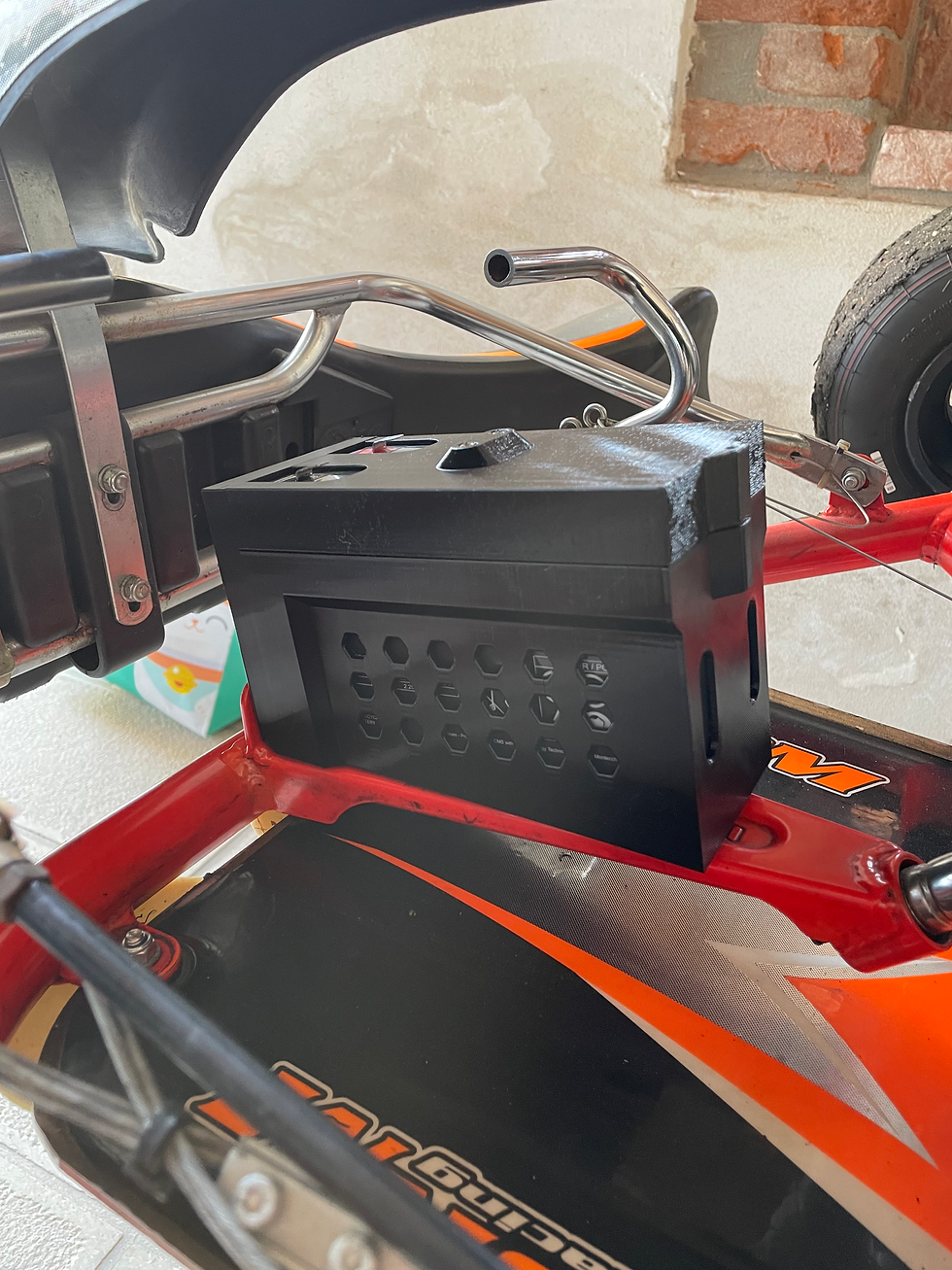
From design to completion
The battery holder was designed entirely in Autodesk Fusion 360, starting with the dimensions of the frame and the battery. This allowed me to develop a bespoke component, optimising every detail: position, mounting points and overall dimensions.
Once the design was complete, the part was manufactured using FDM (Fused Deposition Modelling) technology with nylon, a material that offers an excellent balance between mechanical strength, toughness and lightness. These characteristics make it particularly suitable for functional components subjected to vibrations and stresses, such as those found on a go-kart.
A simple and efficient design
The project is based on a simple philosophy: to eliminate everything that is unnecessary and maintain a simple yet effective design. The result is a sturdy, lightweight battery holder that is perfectly tailored to the vehicle.
Thanks to the design freedom offered by 3D printing, I was able to create a shape that would be impossible to achieve with a standard off-the-shelf component, making the best possible use of the available space.
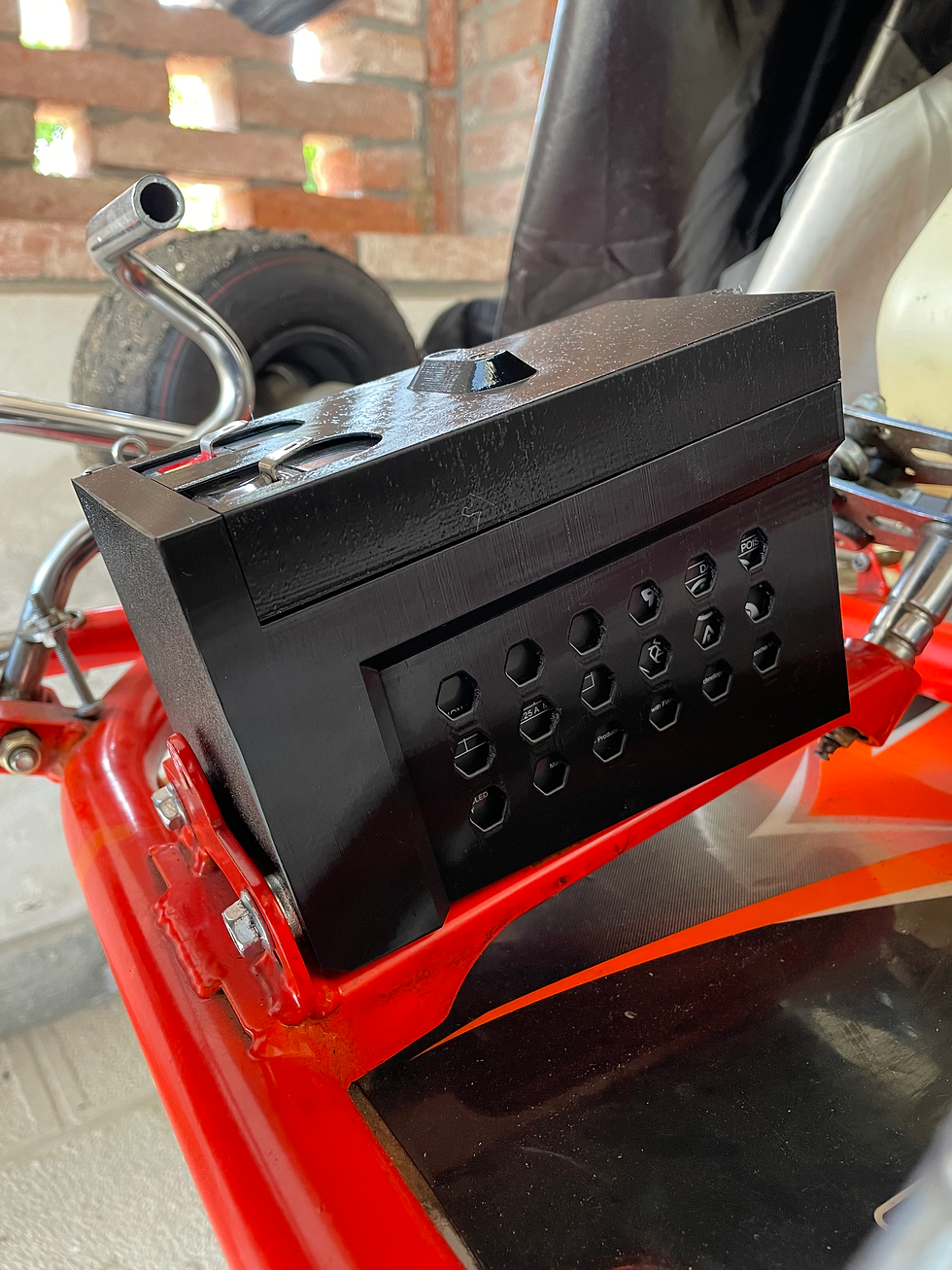
Lower centre of gravity, better weight distribution
One of the most interesting aspects of the project was the repositioning of the battery. By designing the mount from scratch, I was able to place it exactly where I wanted it, lowering the kart’s centre of gravity.
A more favourable weight distribution helps to improve the vehicle’s stability and makes its behaviour on the track more balanced and predictable. Even a seemingly simple component can have a tangible impact on overall performance.
The benefit of customisation
3D printing allows you to design the component to fit the vehicle, rather than the other way round. Every dimension was tailored to my kart, resulting in a precise fit, a clean finish and a fully bespoke solution.
This project demonstrates how the combination of CAD design and 3D printing enables the creation of functional, optimised components that are difficult to achieve using traditional methods.

Conclusions
Designing in Fusion 360 and producing the component in nylon using FDM 3D printing enabled me to create a lightweight, durable battery holder that integrates perfectly into the go-kart.
A simple project, yet one capable of improving both the vehicle’s layout and the battery’s positioning, demonstrating once again how 3D printing is an ideal tool for creating truly bespoke technical components.
Federico.


Comments