
Prices of 3D-printed kart components: the cost of 3D-printed kart components explained
- Federico Rodighiero
- Mar 9
- 4 min read

When I first became interested in karting, one of the biggest challenges was finding high-quality, lightweight, and above all affordable spare parts. In recent years, 3D printing has revolutionized this sector, offering innovative solutions for creating tailor-made, durable, and customized parts. But how much does it really cost to rely on 3D-printed kart components? In this article, I'll tell you everything I've discovered, with a close look at the cost of 3D-printed kart components and how this technology can make a difference.
Cost of 3D printed components: what affects the price?
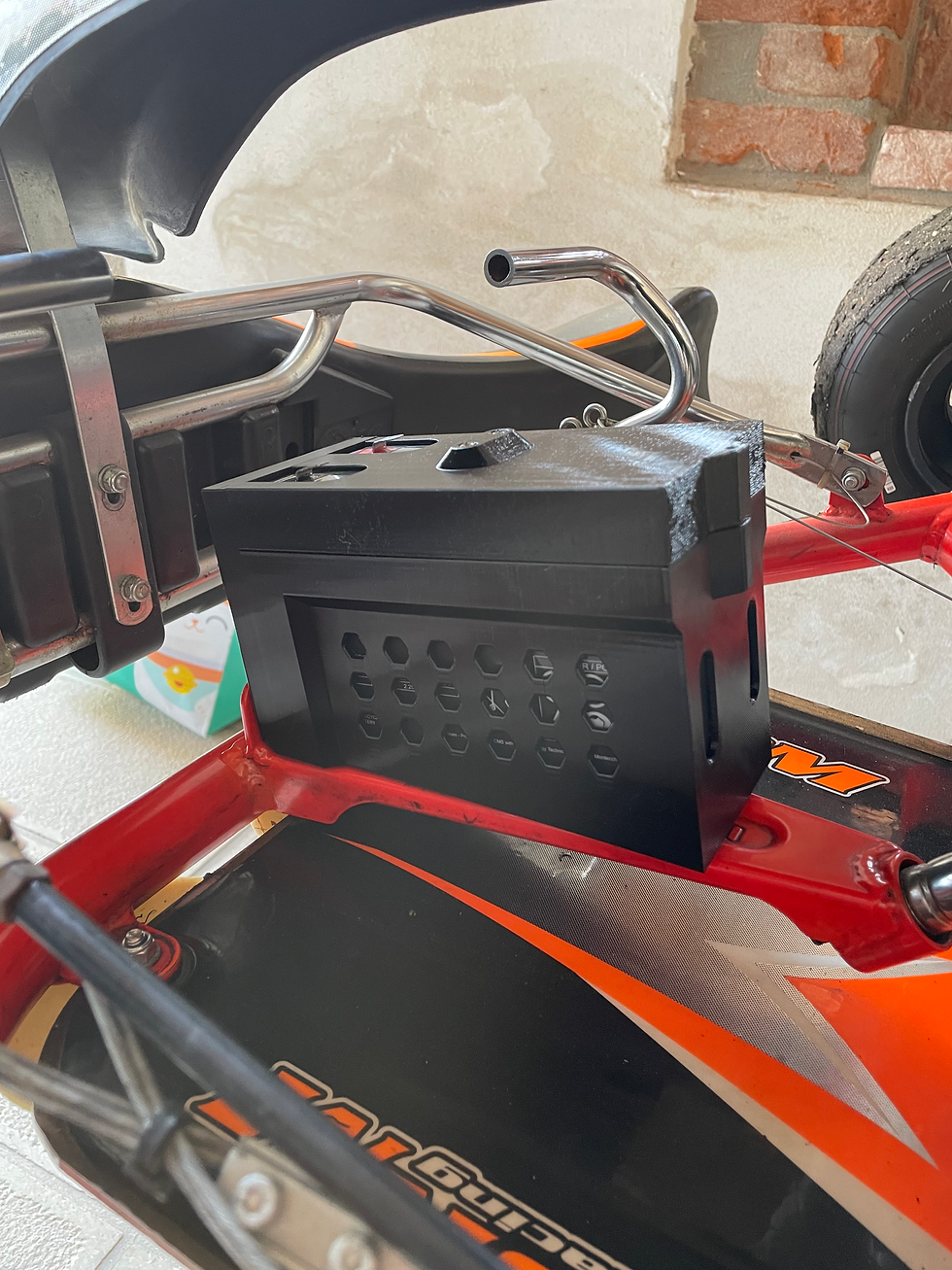
The price of 3D-printed kart components varies greatly depending on several factors. First of all, the material used is crucial: there are engineering plastics, special resins, and even metals that can be 3D printed, each with different costs and characteristics. Personally, I have noticed that the most common materials for karts are carbon fiber reinforced nylon or PETG, because they offer a good compromise between lightness and strength.
Another factor that affects the price is the complexity of the part. Simple parts such as supports or covers can be inexpensive, while more complex components, such as frame parts or elements with complex geometries, require more printing and post-production time, increasing the cost.
Finally, the size of the component is a key factor: the larger the part, the more material is needed and the longer it takes for the 3D printer to produce it. For example, a small engine mount can cost around 30-50 euros, while a fender or structural element can exceed 150 euros.

Economic and practical advantages of 3D printing for karts
If you're wondering whether it's really worth investing in 3D-printed components, I can tell you right away that there are many advantages. First of all, the ability to customize each piece to your needs is priceless. I was able to replace damaged parts that were no longer available on the market, saving time and money.
Furthermore, the lightness of 3D-printed materials can improve kart performance by reducing overall weight without compromising strength. This is something I have experienced firsthand on the track: a lighter kart responds better.
From an economic point of view, 3D printing eliminates many steps in traditional manufacturing, such as moulds and machining, thereby reducing fixed costs. This translates into more competitive prices for customised components or small production runs.
If you would like more detailed information on the prices of 3D kart components, I recommend visiting the Rodj Engineering website, which offers an excellent service specialising in this field.
How much does a professional go-kart cost?
Speaking of costs, it is interesting to understand how much you spend on a complete professional go-kart. Here we enter another world, because a competition kart can cost from a few thousand to tens of thousands of euros, depending on the brand, engine and accessories.
The chassis, for example, is one of the most expensive and delicate elements. It is often made of high-quality steel or aluminium, with precision machining. Here, 3D printing is not yet the main solution, but it can be used to make support components or spare parts.
The engine, transmission and tyres are other factors that greatly affect the final price. However, thanks to 3D printing, it is possible to optimise certain parts, reducing maintenance costs and improving customisation.

How to choose the right 3D components for your kart
When I started evaluating 3D-printed components for my kart, I realised that not all parts are suitable for this technology. Here are some practical tips to guide you:
Assess the function of the component: parts subject to high mechanical stress or continuous wear may require more resistant materials or traditional machining.
Check compatibility: ensure that the printed part fits your kart model perfectly, avoiding complicated modifications.
Rely on specialists: companies such as Rodj Engineering offer advice and manufacture customised components, guaranteeing quality and precision.
Consider the weight: one of the advantages of 3D printing is the possibility of reducing weight without losing strength, so choose lightweight but high-performance materials.
Think about maintenance: easily replaceable or modular parts can simplify kart management.
By following these points, you can make the most of the potential of 3D printing and improve the performance of your vehicle.
Innovation and the future of 3D-printed kart components
3D printing in karting is still in its infancy, but the prospects are exciting. Personally, I believe that in the coming years we will see a significant increase in the use of advanced materials, such as light alloys and composites, which will enable the production of even higher-performance components.
Furthermore, the ability to design parts with complex geometries, impossible to achieve with traditional methods, paves the way for innovative solutions to improve aerodynamics, safety and comfort.
Finally, 3D printing reduces waste and environmental impact, an increasingly important aspect in motorsport too.
If you want to stay up to date with the latest news and find out how 3D printing can revolutionise your kart, I recommend following specialist companies such as Rodj Engineering, which are driving this transformation forward with passion and expertise.
I hope this overview has been useful in helping you better understand the world of 3D-printed kart components and their cost. If you are thinking of upgrading your kart with customised parts, 3D printing is definitely an option worth considering. Happy driving, and may the speed be with you!


Comments